Mark wanders south: The return of a strong and just state is the path to salvation
21:01 · 14 November 2026
7 min read
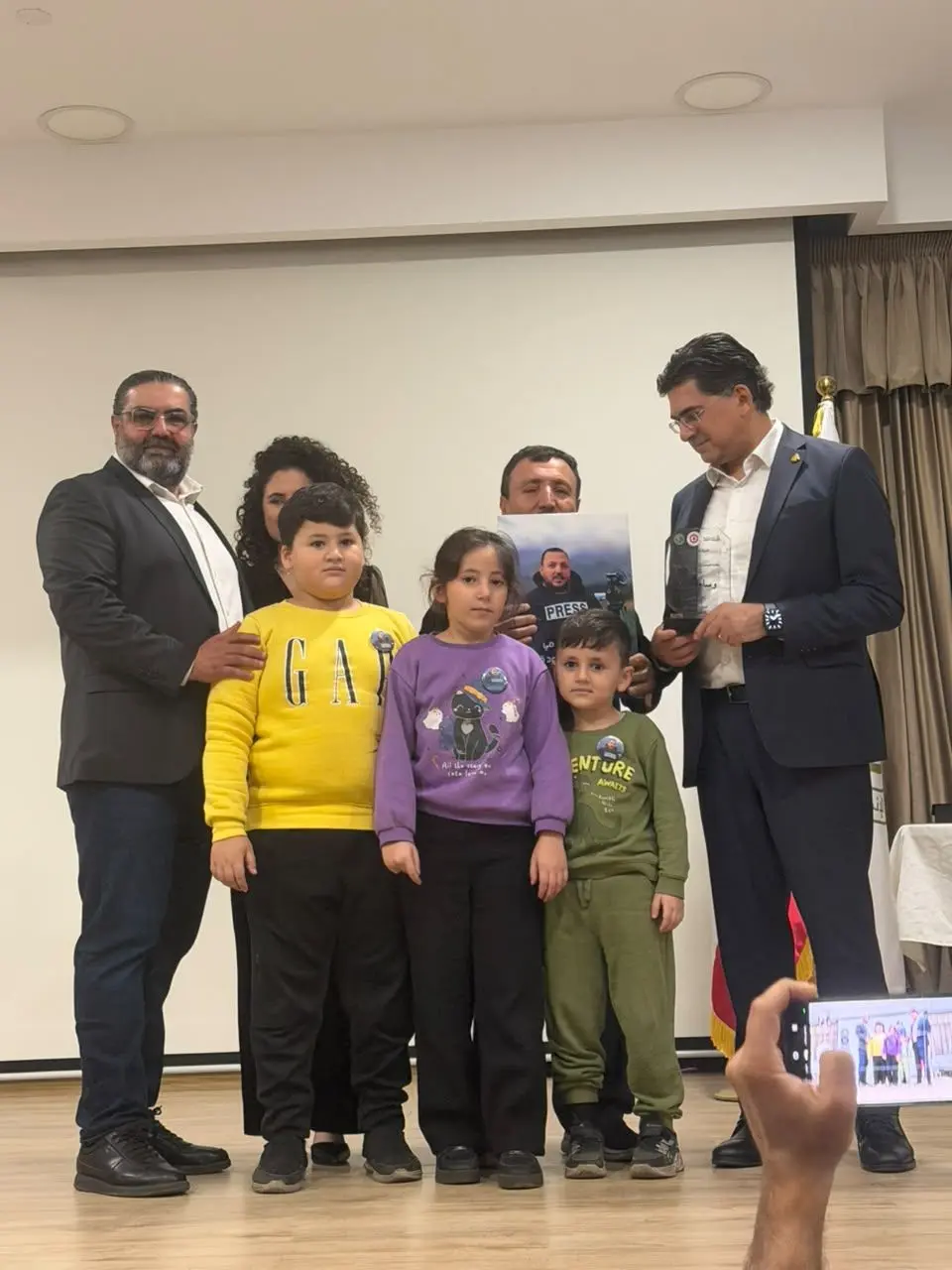
Information Minister Paul Morcos visited the city of Nabatieh, accompanied by Hani Kobeissi, Dr. Michel Moussa, Nasser Jaber, the mayor of Nabatieh, Abbas Fakhr El-Din, the head of the Shaqif Municipalities Union, Khaled Badr El-Din, mayors, mayors, and social and municipal actors, as part of his inspection tour following the Israeli aggression against the city and its region.
The mayor of Nabatieh saluted the media martyrs, stressing that “the media is the fourth authority, and that supporting media professionals is a national duty and a necessity, as they convey the clear and true picture of the crimes of the barbaric enemy, and they expose themselves to dangers in order to carry out their message.”
He considered that media professionals and the media are essential partners in any entitlement, and the media is the address for all national stations,” stressing that “honoring media professionals is a duty, and it is the responsibility of the state and the ministry towards them.”
Fakhr al-Din called on the Ministry of Information to "explain the Zionist crimes against people and stones in the south, and to work to form a specialized committee to document these crimes, in a way that ensures that the truth is preserved and conveyed to public opinion."
He stressed the need for the media not to turn into a platform that serves the enemy or legitimize normalization with it, or engage in skirmishes and debates that have nothing to do with the truth.
For his part, MP Hani Qubaisi spoke about “the enemy’s barbarism in the daily and systematic destruction of towns, homes and villages,” calling for “an official media that exposes the enemy’s crimes.”
He specifically mentioned the martyrs of the press and media, and the journalists who were injured as a result of the repeated and ongoing Israeli attacks.”
Morcos pointed out that "the steadfastness and sacrifices of the people of the South give the claims raised by the state their meaning and depth."
Morcos stressed "the need for the state to be strong and fair, not only providing security, but also providing services, in accordance with the directives of His Excellency the President of the Republic, General Joseph Aoun, and the government."
Regarding the media issue, the Minister of Information explained that “Lebanon, for the first time, has a media law that regulates websites, clearly stipulates hate speech, and determines the criminal liability resulting from it.”
The Minister of Information confirmed from the Greek Melkite Catholic Archdiocese of Sidon that “the main concern of the President of the Republic and the government is to work to fill any vacuum that may result from the withdrawal of UNIFIL forces from the south, indicating that there is serious international interest and continuous follow-up to this file, while researching multiple formulas that guarantee the minimum security requirements in the region.”
He pointed out that the state is working to restore its services in the south, noting that the rate of return of the communications network to work has reached about ninety percent, while efforts are continuing to complete coverage in the remaining areas.
He added that work is continuing to secure the needs of government hospitals and implement development and service projects through the Council for Development and Reconstruction.
Morcos stressed that the state's position is clear in terms of insisting on stopping the Israeli attacks, achieving complete Israeli withdrawal, the return of the people, completing the prisoners' file, and rebuilding the villages. He stressed that the return of the state to the south in terms of security and services is an essential duty, in parallel with the solidarity of citizens, social, humanitarian, and church institutions and municipalities.
In his speech during the visit, Morcos expressed his influence by his presence in the archbishopric, because of the historical and social meanings it represents based on love, convergence, and national unity, stressing the importance of unifying efforts in light of the delicate stage and circumstances that Lebanon is going through, despite the political differences.
He said that what brings the Lebanese together are national values and the concern for the safe return of the south, and the return of its people to their villages and their reconstruction, stressing that the return of a strong and just state to all regions of the south and rallying around its institutions constitute the path to salvation.
He also indicated that his visit also aims to contribute to honoring media professionals, especially delegates, reporters, and photographers who continue to convey the truth in audio and video, despite the risks and challenges they face.
Morcos thanked the Archdiocese for its support and support, pointing out the importance of this support in conveying the concerns and issues of the South to local and international officials, whether during meetings in Lebanon or foreign visits.
As for reconstruction and restoring services in the south, Morcos explained that the government is following up on these files in coordination with the relevant ministries and departments, noting that he held a series of meetings with a number of ministers and officials to review the steps implemented and the remaining needs.
He revealed that he discussed with the Minister of Health the needs of government hospitals in the south and what was secured from them, while he discussed with the Minister of Communications the reality of the network, as the rate of return to work reached about ninety percent, and work is continuing to complete coverage in the areas that still need it, by enhancing the capacity of fiber optic networks (fiber).
For his part, Bishop Elie Bechara Al-Haddad welcomed Minister Morcos, praising his career and role, and considering that what combines his professional and human qualities is in the service of the people and the country.
Honoring photographers
Minister Morcos sponsored a ceremony honoring photographers in Al-Zarriya, which was organized by the Press Photographers Syndicate in cooperation with the “Saeed and Saadi Fakhri Development Foundation”, in the presence of MPs Moussa and Qubaisi, the head of the Press Photographers Syndicate, Ali Alloush, and municipal, media, security and military figures.
The ceremony opened with a speech by the association's director, Mira Marwa, in which she welcomed the attendees. There was also a speech by the head of the Photographers Syndicate, who stressed that “true honor is when photographers achieve their rights.”
As for the Minister of Information, he confirmed that he is “following up the file of attacks on journalists and their safety through protest notes to international forums, including the United Nations Educational, Scientific and Cultural Organization (UNESCO) in Paris and its regional office in Lebanon, the European Union through the head of its mission in Lebanon, and the Human Rights Council, whether directly or through the Lebanese delegate to the Council, in addition to the European Union ambassadors, UNIFIL forces, the International Committee of the Red Cross, and other international references that can be communicated with.”
He stressed that this follow-up “is not a matter of raising censure, but rather it is a definite necessity, and that any honor will not do justice to the martyrs and wounded,” stressing that the Lebanese state “has the responsibility to follow this file seriously.” He pointed to "a new development represented by the completion of a fact-finding mission report from the Office of the United Nations High Commissioner for Human Rights."
He said: "The concern of liberating the south is the primary concern of the Lebanese state, and the return of the people of the south to their land and villages is something that cannot be undone."
He added: “We are working to complete the liberation of our prisoners, rebuild our villages, and have our people return to them, and this is a given,” noting that “the contacts and meetings conducted by officials, most notably His Excellency the President of the Republic, all point towards the necessity of achieving these national demands, in a way that guarantees Israel’s withdrawal from the occupied Lebanese territories, the completion of the liberation of the prisoners, and the return of the people to their villages and their reconstruction.”
In conclusion, Minister Morcos distributed shields to the families of the martyred journalists, the wounded, and members of the union.
In this story:
Joseph Aoun
← Previous article
The "Free Patriotic" completes its internal electoral eligibility
Related Articles
Good news for the people of Nabatieh... “The Civil Registry” is back to work
Contact between Salama and Al-Hajjar halts work in the archaeological area in Nahr Al-Kalb
With a magnitude of 2.9...an earthquake hits Jezzine