Politics
06:34 PM | 21 Jun 2026
On behalf of Hezbollah... Berri pledges to evacuate southern Litani
Fady Mahouly
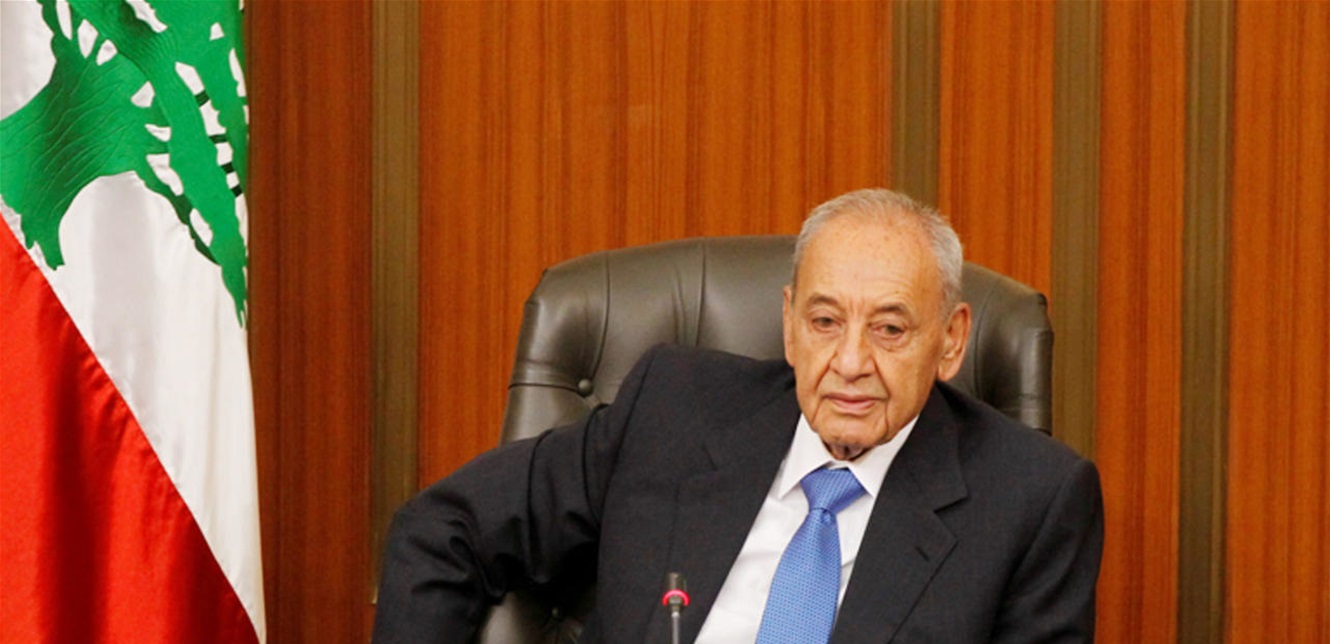
The Speaker of the Lebanese Parliament, Nabih Berri, confirmed that he is in constant contact with the Presidents of the Republic, Joseph Aoun, and the Government, Nawaf Salam, even though “they have ideas other than my own.”
Berri added, in a statement to Asharq Al-Awsat: “I do not think there is a problem between us, as long as we are united first by Israel’s withdrawal from the south, the deployment of the Lebanese army, the return of the people to their cities and villages, the release of prisoners, and the development of a plan to rebuild what was destroyed with Arab and international support, to enable them to remain in their land, which they cling to. We appreciate the Lebanese people of all segments and parties hosting their displaced brothers who were forced to leave their homes, after the systematic Israeli destruction of their villages.”
Berri’s words to Asharq Al-Awsat came on the eve of the launch of the fifth round of Lebanese-Israeli negotiations at the political and military levels, under the auspices of the US State Department in Washington, expressing his satisfaction with “the efforts that led to a ceasefire with the hope that it will hold, and this depends on Israel’s willingness to adhere to it, in exchange for Hezbollah’s commitment.” Because it is not permissible to negotiate under pressure with fire.”
Berri revealed that "Israel" requested a ceasefire, and this is what it informed the "mechanism" committee supervising the implementation of the cessation of hostilities.
He said, “Its agreement to stop it came based on the American pressure exerted on it, after it flooded the south with two bloody days in which dozens of civilians were killed, including medics in the (Islamic Message) Scouts and Civil Defense, in addition to the elderly, women, and children.”
He stressed that “the party” remains committed to the ceasefire, and that “Israel” is the one violating it, and we hope that it will hold out under American pressure, and we welcome any effort from any party to pressure “Israel” to stop its aggressive war on Lebanon.”
Berri stopped short of his opposition to the experimental areas, explaining his position by saying that agreeing on their geographical borders could take two years, if not more, in contrast to adopting the administrative division of the south on the basis of districts, provided that the gradual withdrawal from them begins in conjunction with the deployment of the Lebanese army.
Berri pointed out that “we have no interest in wasting the time that allows Israel to continue its aggression, and that the solution lies in adopting a timetable for its withdrawal from every district in the south, in exchange for deploying the army.” Because it remains the shortest way to liberate it from the occupation, instead of getting bogged down in determining the geographical borders of each experimental area, which keeps the south under pressure from “Israel” with fire, under the pretext of lack of agreement on dividing it into experimental areas.”
Berri stressed that “Israel’s withdrawal from any district, such as Tire, for example, must be accompanied by the deployment of the army, to make way for the return of the displaced to their villages, on the condition that the return is limited to the people of the district, and so on.”
He said, “Israel’s withdrawal from it will coincide with it being free of weapons, and this is what I pledged to do on behalf of Hezbollah, to evacuate southern Litani, on the condition that Israel commits to that.”
Berri stressed “the necessity of adopting an administrative division for the south, taking into account those areas that are still under occupation.” Then it is left to the army leadership to set a timetable for the deployment of military units there in stages, in exchange for Israel’s commitment to a similar schedule for its withdrawal from it, in a way that allows the displaced from this or that district to return to their villages,” in an indirect reference to limiting the return to its people.

← Previous article
Trump: We will strike Iran if it does not prevent Hezbollah... and references to a Syrian role in Lebanon
Related Articles
After deleting his post about the South... Salam: My account was hacked
The Minister of Defense apologizes: Disappointment will not be the end of the story

Basil: How do you demand that the army fight “the party” and terrorism while you pardon its killers?